From Thin Files to Full Pictures: Expanding Credit Access Without Expanding Risk
Gig workers, immigrants, first-time borrowers — your next best customers may look risky on paper. They aren’t.
Meet Maria. She moved to the United States five years ago, found steady work as a home health aide, and has been reliably sending money home to her family ever since. She’s never missed a rent payment. She manages her money carefully, spending less than she earns every single month. Maria has no credit score. She’s never borrowed money before.
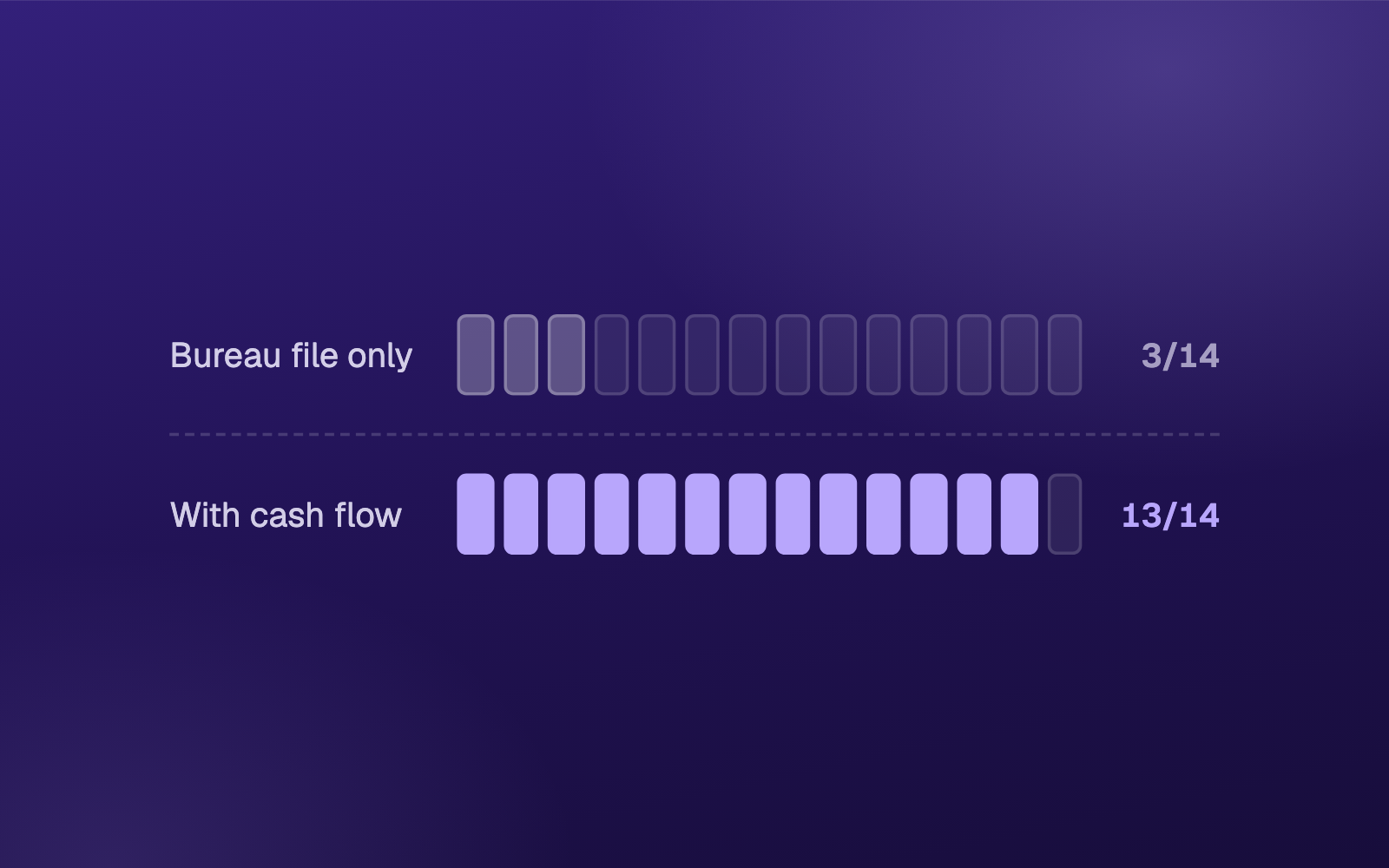
Under a traditional underwriting model, Maria is declined outright or routed to a subprime product with a rate that doesn’t reflect her actual risk profile. With cash flow underwriting, a lender can see her consistent income, disciplined spending, and growing savings. The lending decision changes completely.
Who Falls Through the Cracks
Credit Invisibles
Roughly 50 million Americans have no credit score — not because they’re bad with money, but because they’ve never had a reason to borrow. Their financial behavior is completely invisible to the credit reporting system.
Gig and Self-Employed Workers
Freelancers, contractors, gig workers — their income can be strong and consistent, but it doesn’t always look that way in a credit file, especially if they’re newer to self-employment.
Recent Immigrants
Many immigrants arrive with no U.S. credit history regardless of their financial sophistication. Someone who managed complex finances in their home country for decades starts from zero here. That’s a gap in the credit infrastructure, not evidence of financial irresponsibility.
Young Adults Entering the Workforce
First-time borrowers face the classic catch-22: you can’t build credit without borrowing, and lenders won’t lend without credit history. Cash flow underwriting can evaluate actual financial behavior — however short the history — rather than applying a thin-file penalty.
When you can evaluate actual financial behavior — real income, real spending, real savings — you can distinguish between “no credit history” and “actually risky.” Most thin-file borrowers fall squarely into the first category.
Expanding Access Doesn’t Mean Expanding Risk
Research from the CFPB has found that incorporating cash flow data into underwriting decisions improves default prediction — meaning it doesn’t just expand access, it can actually improve portfolio quality at the same time. You’re not taking on more risk. You’re getting better at measuring it.
How Kora Makes It Practical
Kora’s platform ingests transaction data, analyzes income verification, spending behavior, savings patterns, and risk signals, and surfaces findings directly into your underwriting process. The Kora Score gives you a single, consistent metric for evaluating cash flow health alongside traditional credit data — so you can serve borrowers like Maria confidently, responsibly, and profitably.
Grow your lending book responsibly.
Learn how the Kora Score helps you evaluate borrowers that traditional underwriting misses.


