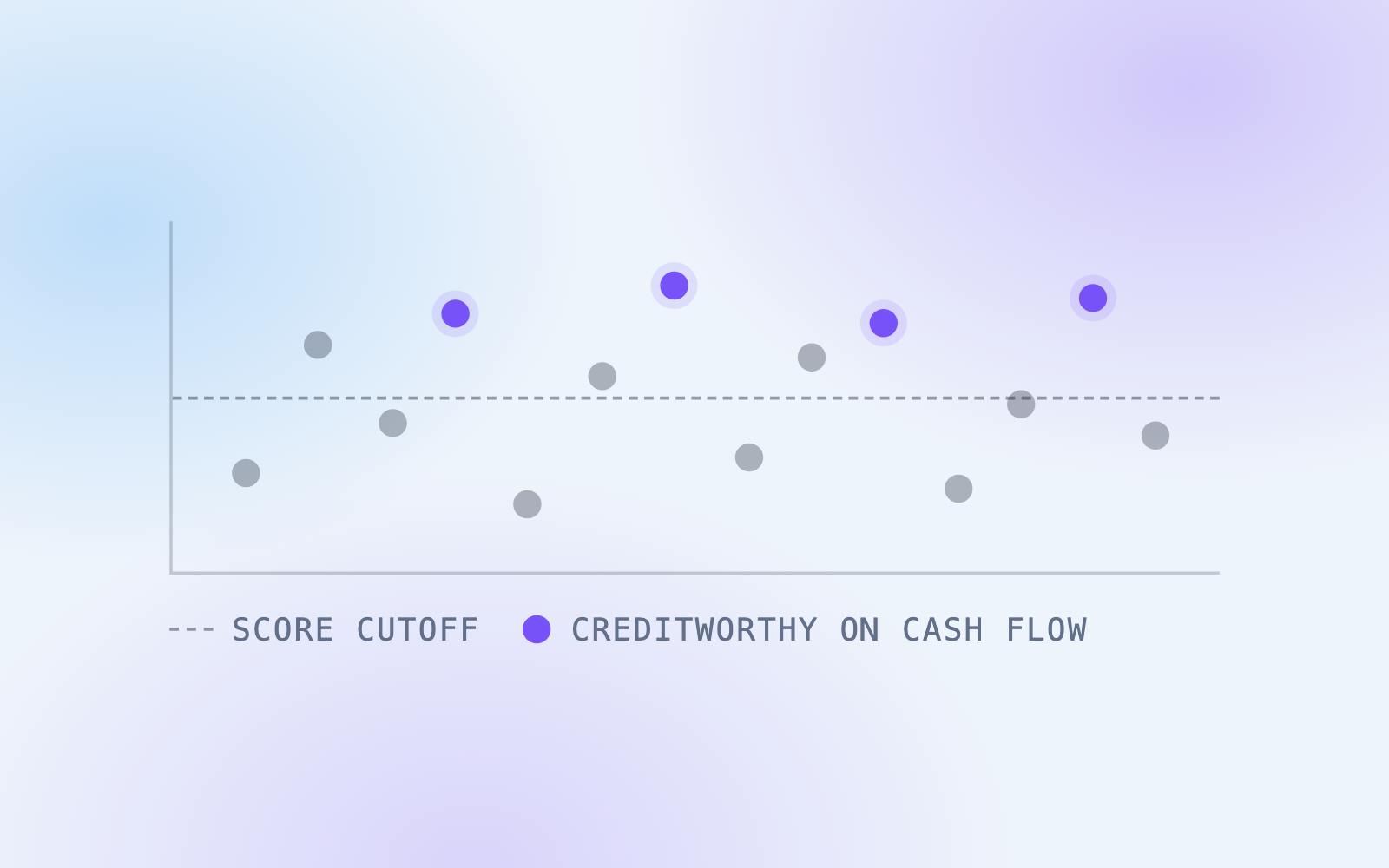
Millions of creditworthy borrowers get declined every year. Here’s what lenders are missing — and how to fix it.
Here’s a scenario that plays out thousands of times a day at lending institutions across the country: A borrower applies for a loan. The underwriter pulls their credit file. The score comes back thin — maybe they’re self-employed, maybe they’re new to the country, maybe they just never needed to borrow before. The application gets declined. The lender moves on.
The problem? That borrower might have had $6,000 landing in their bank account every month like clockwork for the past three years. They pay their rent on time. They’ve never overdrafted. By any real-world measure of financial health, they’re a solid borrower. But the credit score didn’t know any of that — and neither did the lender.
This isn’t an edge case. It’s a systemic blind spot, and it’s costing lenders real revenue.
The Credit Score Was Never the Full Story
Credit scores were designed to answer a specific question: has this person repaid borrowed money in the past? That’s useful, but it’s a narrow lens. It tells you about someone’s relationship with formal debt — credit cards, auto loans, mortgages. It tells you nothing about whether they consistently pay their bills, what their income looks like month to month, or whether they have savings to fall back on if things get tight.
For most of the 20th century, that was fine. Most workers had W-2 income, long employment histories, and relatively predictable financial lives. The credit score worked well enough. But the workforce has changed dramatically. Today, a huge chunk of borrowers earn income through freelance work, gig platforms, small businesses, or multiple part-time jobs. Their cash flow can be strong and consistent — it just doesn’t show up neatly in a credit file.
A credit score tells you how someone has managed debt. Cash flow data tells you how they actually manage money. Those are two very different things — and lenders who only look at one are making decisions with half the picture.
What Cash Flow Underwriting Actually Reveals
Cash flow underwriting looks at what’s really happening in a borrower’s financial life: their income sources, the consistency of deposits, how they manage their spending, whether they’re regularly overdrafting or maintaining healthy balances.
Income Consistency
Even irregular income can be consistent. A freelancer who earns $4,000–$6,000 every month across different clients is demonstrating real financial reliability — but that pattern only shows up in their bank transactions, not their credit file.
Expense Management
How a borrower manages their spending relative to their income is a powerful predictor of loan performance. Someone who consistently lives within their means is often a better credit risk than someone with a higher score but erratic spending habits.
Cash Reserves
Does the borrower have a financial cushion? Someone who regularly maintains a healthy account balance is far less likely to default after an unexpected expense than someone running close to zero every month.
The Business Case for Lenders
This isn’t just about giving more people a chance. It’s about finding creditworthy borrowers that your current underwriting model is systematically missing. Every declined application that was actually creditworthy is a loan that didn’t get made, a customer relationship that didn’t form, and revenue that walked out the door.
According to the Consumer Financial Protection Bureau, adding cash flow data to underwriting models actually improves the prediction of late payments beyond what credit scores alone can do. That means lower default rates alongside higher approval rates.
Where Kora Comes In
At Kora, we built our software specifically to make cash flow underwriting practical and scalable for lenders. Our platform analyzes transaction-level data to identify income sources, assess spending patterns, flag risk signals, and surface a comprehensive picture of financial health — all distilled into the Kora Score, a single metric that plugs directly into your existing underwriting workflow.
Ready to stop leaving money on the table?
See how Kora’s cash flow underwriting software fits into your existing lending workflow.


